
 In a world where air quality is becoming an ever more urgent concern, a team of researchers from some of the Mediterranean’s most prominent academic institutions came together to explore a lesser-seen dimension of the atmosphere around us: the invisible microbial communities that travel through the air.
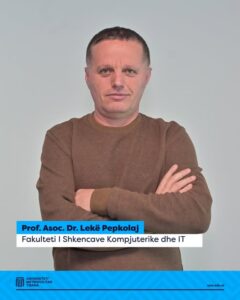
At the heart of this study is Assoc. Prof. Dr. Lekë Pepkolaj, lecturer at Metropolitan University of Tirana, who, in collaboration with the University of Salento (Italy), the Center for Applied Physics and the National Institute for Nuclear Physics in Lecce, as well as researchers from Malta and Greece, led a comprehensive investigation across five key locations in the Central Mediterranean.
From Puglia to Zakynthos: A Journey Under the Microscope
The research focused on airborne microbial diversity in five distinct areas: Puglia and Lamezia Terme in Southern Italy, Albania, Malta, and the Greek island of Zakynthos. Each site, urban, rural, or coastal—offered unique environmental characteristics that influence the composition and distribution of airborne bacteria and fungi.
Instead of traditional methods, the team used cutting-edge DNA-based techniques and advanced data analyses to precisely identify microbial communities and explore how they varied across regions.
What’s in the Air We Breathe?
The results were both revealing and thought-provoking:
- The bacterium Sphingomonas was detected in all study sites, making it a kind of “constant traveler” in Mediterranean air.
- Brevundimonas, Geodermatophilus, and Rubrobacter were more prevalent in rural and coastal areas.
- Among fungi, Cladosporium and Alternaria, well-known for their role in allergies and respiratory conditions—were also widespread in these environments.
Statistical analyses, including dendrograms and principal component analysis, highlighted strong connections between microbial genera and specific environmental characteristics, demonstrating how air microbiota is deeply shaped by geography and ecosystem type.
Beyond the Data: Understanding Environmental Influence
This study goes beyond listing airborne microorganisms. It sheds light on the complex relationship between the environment and the invisible life forms that surround us, offering crucial insights for scientists, environmental policymakers, and public health experts—especially in ecologically sensitive Mediterranean regions.
Published in a Leading International Journal
The study is published in the open-access scientific journal Environmental Advances, part of Elsevier, and is ranked in the first quartile (Q1) by Scopus, reflecting its scientific rigor and relevance in the environmental research community.
Read the full article here: https://www.sciencedirect.com/science/article/pii/S2666765725000523